It’s Just Dirt
In second grade, I won our class’s Inventor of the Year award for a ball-and-cup game fashioned from an old milk jug, a ping pong ball, some string, and the better part of a roll of duct tape. Years later, I wowed my extended family at Thanksgiving by demonstrating a real, working crossbow I’d hacked, sawed, and nailed together from scraps of my dad’s weekend projects. The red-feathered bolt I launched from the front porch sailed clear across our yard and over the street, burying itself in the neighbor’s oak tree. In college, I became the poster guy. I worked with our on-campus coffee shop to design concert posters. While one or two were purely digital, most were original acrylic paintings or ink-pen drawings, photographed and brought into design software to add showtimes and band names. Fresh out of college, the maintenance staff at my apartment complex noticed the woodworking shop I kept in my spare bedroom and offered me a job as a carpenter. It was my first full-time job, one I used to pay the bills until I moved away.
I tell these stories not to pad my portfolio (I’m doubtful, at best, that I invented the crossbow), but to establish a track record. From that record, I’ve developed a unique approach to my career, specifically, the marriage of business and creativity. My philosophy boils down to three words. They are easy enough to remember, though deceptively difficult to put into practice.
Process over results.
I made friends with a number of pottery majors in college. We shared the same schedule, coming and going from various campus creative labs in the wee hours of the morning, our eager hands and indie band t-shirts splattered with the overspray of our crafts—mine with paint, graphite dust, and ink, theirs with reddish-brown clay. One of my friends told me a story about their favorite ceramics professor, Mr. Benson. At the beginning of the semester, Mr. Benson split the class in two. One half he assigned a momentous task: take the semester, dial in, research, and create the perfect pot to present as a final project. Just the one. To the other half, he assigned the far more tedious, considerably less sexy task of creating one hundred pots. These pots could be too thin, wobble on the table, or break in the kiln. There just had to be a hundred of them by the end of the course.
The ceramics class set to work. Almost instantly, the students assigned to the “perfect pot” group developed a preciousness, a fragility about the project. Many spent months obsessively researching, refusing to dirty their hands on the potter’s wheel until they were certain they could succeed. These students meticulously tweaked, pinched, and doted over their pots. Previously free-spirited students became rigid, afraid to experiment, terrified to put a toe outside established ceramic norms. They met constructive criticism with militaristic defense. When her pot cracked in the kiln, one sophomore potter had a full-on mental breakdown, requiring the campus psychologist to send her home for a long weekend to recover. She wasn’t the only one.
In contrast, the students from the “hundred pots” project had way more fun. They started experimenting with clay on day one. Their first pots were nothing to write home about. In fact, some were categorically bad—uneven, misshapen, ham-fisted attempts at art, hardly worthy to hold spare pens or pencils, much less count toward a final grade. Even so, there was a playfulness about this group’s work. Several pieces presented at the mid-semester review bore crude smiley faces, purposefully wavy figures, or references to video game and movie characters. A few were suspiciously phallic. One student threw a perfectly good pot against the wall during his presentation, just to watch it break.
When the semester finally ended and the project’s due date arrived, Mr. Benson’s class set up a booth outside the cafeteria, with select pieces available for purchase. The pots created by the hundred pots group were true works of art. They were simultaneously sturdy and delicate, functional and shapely. There was an ease and flow to their curves and handles. The glazes were bright, smooth, and unmarred. I bought several. The perfect pots, however, were anything but. They weren’t failures, not really, but they were safe to the point of being mundane. Some were awkward and leaned to one side. They reminded me of tired menu items from a struggling restaurant, unable to capture the magic of yesteryear.
I found it odd the hundred pots group had achieved such mastery in so little time, especially when perfection was explicitly not the goal. I found it even stranger that the students assigned to create the perfect pot—many of whom I knew to be hard workers and talented artists—were completely incapable of doing so, precisely because they were trying so hard. There seemed to be a kind of upside-down wisdom at play, where the tighter you held to some idealized vision, the worse the final product would be. The reverse was equally true. By diving deep into the messy process of creation and surrendering the results, by laughing at their failures and even welcoming them, the students from the hundred pots group were able to instill a sense of beauty in their work that was unachievable by those burdened with perfection.
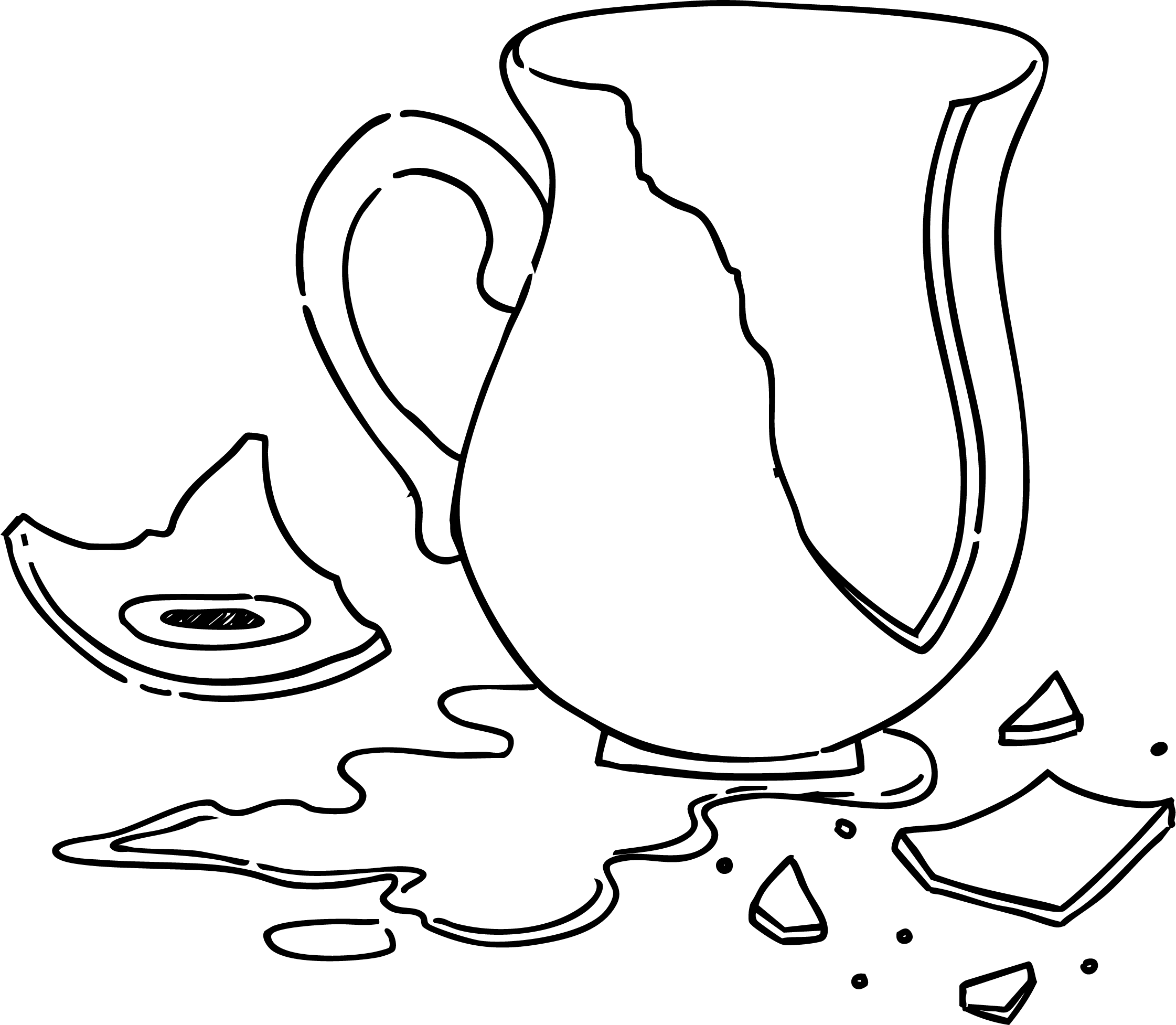
This philosophy isn’t just heady artist-speak. Once, my roommate (a member of the hundred pots group) gave me an exquisite handmade coffee mug to celebrate the passing of our final exams. Not 24 hours later, we were making coffee in the kitchen when I turned to grab the milk, bumping my new mug with a careless elbow. The mug hit the linoleum and shattered. My heart sank. I looked at my friend, bracing for the worst. Instead of shouting, he shrugged, a monkish grin on his bearded face, and said simply, “It’s just dirt.”
And it was.
The ball-in-cup game from second grade is long gone, I’m sure. So is my empty crossbow, my crumpled concert posters, and countless other projects I’ve completed over the years. What remains is this: the greatest achievements of my creative career—the campaigns that outperformed expectations, the designs that won awards—all came from the same place as Mr. Benson’s hundred pots. Not from holding tight and treating my deliverables as precious relics, but from showing up day after day with dirty hands and sore feet, enduring the failures, and, on more than one occasion, smashing it all to bits.