There’s a strange little bar on the edge of a swampy lake north of Orlando, Florida called The Black Hammock. Nestled in the shade of moss-bearded cypress trees and pointy palmettos, The Black Hammock offers bingo on Wednesdays, 2-for-1 margaritas all day (every day), and guided airboat rides Tuesday through Sunday. There’s a gigantic live alligator in a concrete pen out front, alongside a caged assortment of parrots and lizards. It’s the kind of bar with a gift shop attached, selling home-brewed hot sauce and taxidermied alligator heads to tourists and bikers. An alarming (and surprisingly delicious) portion of their menu is dedicated to frog legs and alligator meat. The walls smell of gasoline and fry oil. The Black Hammock is also home to one of my favorite signs.
I found this sign during my first visit, planted in freshly mowed grass beside a handsome wooden gazebo out back, barely six inches from the lake’s inky water.
“Please,” the sign implored in red ink, accompanied by a silhouetted hand reaching for the head of a snarling reptile. “Do not molest the alligators.”
I took a step back from the water’s edge and looked out across the lake at a wall of blue-black clouds looming over a highway bridge. A peal of thunder kneaded the humid afternoon air like an enthusiastic masseuse. Extracurricular proclivities aside, I found the sign intriguing.
The sign made me imagine a group of bar patrons sitting in The Black Hammock’s gazebo well past closing time, their glasses drained of beer, their plates cleared of frog legs, when suddenly, the lights go out. Someone forgot to pay the power bill. There’s a heavy, sliding sound beneath the table. One of the patrons, Jim, feels something brush against his leg. He reaches down. His hand meets a smooth, cold surface; it is long, leathery, and winding. He has no idea he’s holding an alligator’s tail.
“Hey,” Jim says, taking the cigar stub from his mouth. “There’s something under our table. I think it’s a vine. Maybe a branch?”
Another patron grasps in the dark. “No, no,” Bishop says, running her hand along the flat, hard, bumpy surface of the alligator’s head. “This is clearly a big rock. I wonder where it came from.”
“You’re both wrong,” says Alejandro. He can feel teeth and claws. His heart drops into his belly. “I think… I think it’s a bear!”
The screech of a passing waterbird pulled me from the daydream. A sense of familiarity lingered, and I realized my imagined conversation wasn’t new. I’d heard it a hundred times in my career as a brand strategist and creative director, in every sector from craft spirits to nonprofits, in mom-and-pop shops and enterprise SaaS platforms alike.
“I need this one-pager branded,” a sales rep might tell me.
“Have you come up with the brand for October’s industry event?” a vendor asks over email.
Someone from marketing raises their hand to discuss the fallout of a bad acquisition. “What will this do to our brand?”
There is a darkness, an obscuring force that muddles the definition of the word brand. It’s almost as if the word itself has gone out of its way to avoid being accurately used, like a bar of soap through wet fingers. When the sales rep asks for his document to be branded, he means he wants its visual style aligned with the company’s brand guidelines. The brand mentioned by the vendor is closer to a theme. It’s a tagline or campaign message. Then there’s the issue of brand raised by the marketing team member. In this case, brand equals public perception, what the market thinks of the company. This is hardly an exhaustive list. A brand can be a logo. A brand can be a set of colors. To make matters more confusing, “brand” is frequently attached to any number of business concepts and discussed ad nauseam in boardrooms and strategy decks—brand identity, brand awareness, brand equity, brand promise, brand voice, brand architecture—I could go on (and on).
None of these definitions are wholly inaccurate; each holds a kernel of truth. But they’re grasping at something they cannot see, and as a result, each hand reaching under the proverbial table touches something completely different from the next. By focusing on isolated parts, on inert external components rather than the living whole, insides and outsides together, all anyone can do is guess.
A blue-white flash lit up the overcast sky. Another peal of thunder followed, closer, louder. The heavy rumble lumbered across glassy water, as slow and inexorable as time, before crashing like a wave against the lake’s cattail shore. A table of Friday night revelers broke into laughter on The Black Hammock’s patio, slapping their table and briefly frightening the cicadas and crickets into silence. A tree frog chirped three times from somewhere high in the moss.
Then it struck me: what a brand really is.
Hot Dog!
How many times have you visited your local suburban strip mall, branded to within an inch of its life and populated by row upon row of meticulously manicured storefronts, only to walk away with a nagging sense of lack, as if you’d just gorged yourself at a buffet and walked out hungrier than when you walked in? How is it that a cavalcade of perfectly executed product photos, award-winning ad campaigns, and expertly crafted taglines can come together in such an empty and joyless way? The picture of that cheeseburger looked divine in the window, but it arrived at your table as a lukewarm mass of overcooked beef and stale bread, delivered by a sour-faced employee who clearly has better places to be. You forked over a hundred dollars for that top; the hem came apart in the wash a month later. The bathroom at the big-name bookstore was disgusting. There was a multiple-table brawl at the fast food taco spot. There’s a reason we call such places soulless. I call them brandless. Which is funny, considering the marketing war chests spent “branding” these multi-billion-dollar chain stores rival the GDP of small countries. Then, hidden in the mountains and tucked back from the road, there’s South Park Coney Island Boardwalk.
Unless you frequent a particular stretch of Highway 285 outside Bailey, Colorado, you’ve never heard of South Park Coney Island Boardwalk. And why should you? They don’t have a logo. They don’t have an ownable color system or recognizable font family. An error pops up when you try to access their Instagram. Their website is https://info316059.wixsite.com/website-2, and it looks like somebody’s well-intentioned nephew designed it. Under the contact section, the boardwalk’s hours are listed as “temporarily closed”. By all indications, South Park Coney Island Boardwalk is either out of business or on its last legs. Pull up to the concrete bridge over Roark Creek, however, and you’ll find an entirely different story.
The main building is a hot dog. No, really. South Park Coney Island Boardwalk is famous for its 35-foot-long bun and 42-foot-long wiener, slathered in plaster relish and mustard. A letter board menu with maybe a dozen items adorns the wall over a small, sub-shop style kitchen. The owners work with Colorado soda shops and local hot dog producers. Their black and white checkered floor is spotless; so is their outdoor seating area—not a cigarette butt or loose napkin in sight. The restrooms are spectacularly clean for a roadside diner. Lines regularly snake out the door, along the red-striped awning, down the stairs, and into the parking lot, but they move fast. The handful of teenagers working behind the counter are some of the nicest, most competent people I’ve ever met. Last time I was there, an enthusiastic wiener dog was prancing across the parking lot, entirely by chance, an angelic meat-tube mascot.
There’s something undeniably real about South Park Coney Island Boardwalk. If there wasn’t, the business wouldn’t have survived multiple owners and several moves across the state since 1966. It’s been referenced multiple times in the hit TV series, South Park. When the beloved stand briefly closed in 2006, the line of cars waiting to sneak in one last brat stretched for miles. There’s a song playing beneath the creek’s babble and the thrum of road-trip long-haulers. You feel it the moment you pull into the parking lot. You see it in the neatly stacked trays next to the garbage cans, and again in the cheerful crackle of the gift shop’s free popcorn machine. Something hums under the floorboards. We might say this place has heart, gobs of it. It’s got soul. It’s got what any Fortune 500 marketing department would kill for, what so many businesses strive to achieve, yet so few actually realize.
South Park Coney Island Boardwalk has a living, breathing brand.
So if a business without a logo, without a professional marketing plan, without a social media team, without documented brand guidelines or any messaging strategy—all the trappings of marketing best practices—can lay claim to a vibrant, time-tested brand that resonates with customers and newcomers alike, one that drives revenue, pays the bills, and makes the news, then why are the rest of us wasting our time arguing over which Pantone to use on the upcoming trade show brochure? Clearly something important has been lost along the way. I intend to find it.
Clear as Mud
Without enough energy to produce real thunder and lightning, a storm broadcasting thunder sounds over a loudspeaker would be, at best, pitiful, and at worst, deceptive. This might sound ridiculous, except it’s exactly what some companies do day-in and day-out for years, burning thousands of hours in an attempt to build a brand that resonates with customers. Businesses perform this dog and pony show because, on some level, there’s something empty inside them. In place of a warm, beating heart, far too many tin-man businesses are kept alive by a cold, empty hole. Sometimes that hole is ignorance; nobody has stopped long enough to consider what their business’s brand should be. Fewer still dig deeper to define “brand” in the first place.
More commonly, businesses have too much heart, or more accurately, too many hearts. Consider a fast-growing fintech. The founder says the company exists to help a specific market solve a persistent problem. The private equity firm funding the venture disagrees: this fintech exists solely to generate a substantial return for investors, and quickly. The product team chimes in. They believe the company’s primary goal is building the highest-quality software money can buy. Sales weighs in next. They couldn’t care less what the business stands for, so long as someone finally wins that all-expenses-paid vacation that’s been dangling in front of them all year. Our fintech doesn’t have one heart, but twelve, each beating to its own rhythm, each pulling in a different direction. This discord creates a sucking vacuum where pumping muscle should be. Employees start grasping for life rafts, desperately protecting “me and mine” in the face of competition and chaos instead of giving their best to teammates and customers. Like a chariot without a driver, our fintech won’t be driven forward toward success. Rather, it will be ripped apart where it stands.
Brandlessness is a death sentence. But death doesn’t necessarily mean bankruptcy and foreclosure. Sometimes death means ten figures in annual recurring revenue. Death means investor pitch decks that practically write themselves. Lift the mask, and the stench will set you back on your heels: burned-out employees, dissatisfied customers, cobbled-together products. There’s no end to the suffering a zombie business can inflict on its customers, its employees, and the world.
The good news, to quote a memorable (if fictitious) celebrity mathematician, is that life, uh, finds a way. There’s no such thing as a hopeless case. Pure light shines at the center of every business. Brands are kindled in dusty basements and college dorm rooms, breathed into the marketplace by dreamers and idealists with nothing to lose. Not yet. Every misstep in the years that follow, every manipulative voice taken seriously and bad strategy adopted, is mud caked on the lens of that deep light. Sometimes mud arrives in a single, devastating avalanche. It looks like the aggressive, morally dubious sales strategy adopted after a lackluster quarter, creating a palpable chasm between what a business promises and what it delivers. Other times, mud arrives like gentle dust followed by midnight rain. It’s the corners cut in the code, the little compromises nobody owns.
Customers feel this mud viscerally. It grinds against their teeth and squelches between their toes. It inspires bad Yelp reviews and nationwide boycotts. When enough mud jams the gears, businesses attempt a rebrand, hoping a fresh coat of paint will fix the problem. They’ll overhaul their messaging, double down on market research, or spend a pretty penny with creative agencies for a new slogan and website. But branding is less about building something new and more about recovering something very old and very close, more backyard archaeological dig than overseas construction site. Branding is inherently dirty work that requires everyone, from investors to janitors, to unrelentingly and unflinchingly deal with the muck collecting in their engines and wheel wells. The longer this process has been avoided, the harder it will be to get back to that original, shiny state. To get clean. To be whole.
Your brand is your business’s lifeblood; it’s where all the good stuff comes from, why customers were drawn to you in the first place. A brand isn’t a singular, isolated object, like a rock or a stick. You can no more atomize a brand into a spreadsheet of identifiable components than you can tear the wings off a bird and expect it to fly. A brand is an intimate, interdependent relationship. What remains is a question as simple to ask as it is difficult to answer: A relationship between what?
Down with The Funky Beat
A brand’s anatomy has three primary parts. Well, technically four. Kind of. Perhaps parts is the wrong word. Parts implies any one can exist separated from the others, extracted for inspection. Faces creates the same issue. Facets is closer to the truth, but still too distinct. When you look at a facet of a gemstone, it’s hard to see the other sides. Facets shine and demand attention. Each of a brand’s facets exists to serve or reveal its neighbors, as a window to the outside world or a hype man to the main event. Poles might be the best descriptor, as in the north and south poles of a magnet, but that lacks the sequential nature of a brand. Then again, sequential means one came before the other, which is equal parts true and false, depending on how tightly you squint. Love triangle might honestly hold the most water, or maybe a love square, but try adding a slide to your next board deck explaining how your new brand is a foursome, and we’ll see how quickly HR hangs you from the rafters by your thumbs.
Surrender is a strange first step to success, but it’s essential if we want to accurately define a word as slippery and ineffable as brand. We’ll never get it fully right. There will always be holes. Only by stepping back and releasing our preconceived notions of what a brand should or shouldn’t be can we hope to understand what a brand actually is. We have to take ourselves, and our search for the truth, far less seriously. The second we do, we turn our desperate hunt into play. Brands love to play. They love to loosen their ties, unbutton their suits, stretch out their wings, and dance like nobody’s watching. This dance is what inspires everyone around them—customers, employees, even other brands—to stand up and dance along. Healthy, living brands are fundamentally contagious. And only those willing to join in the dance, to abandon themselves to the funky beat, even if it means looking like an idiot (especially if it means looking like an idiot), will ever see the truth, clear-eyed. With this in mind, I think it’s time to come clean.
I have a secret to tell you. It’s a big secret. A ridiculous secret. It’s the kind of secret that’s secret not because I don’t want to tell it, but because it doesn’t want to be told. I can shout this secret from street corners and open balconies. I can post about it on LinkedIn. Hell, I could run a Super Bowl ad and tell the world my secret. I don’t think very many people would believe me. Secrets are strange, uncomfortable things, easier to ignore or laugh at than to sit down and listen to. But I trust you. I think you’ll get it. Or maybe this will be the last section you read; that’s a risk I’m willing to take.
Your brand is a frog. All frogs have three parts. They have little frog bodies. They have little frog minds. They make little frog sounds. How a frog’s parts are assembled and aligned matters more than the parts themselves.
Body. Mind. Voice. Alignment.
That’s all there is to it.
Cookie Town™
Frogs (like banana trees, wolves, clams, mosquitos, mako sharks, bald eagles, mushrooms, starfish, and turnips) are the expression of a substance called deoxyribonucleic acid, or DNA. DNA works a lot like computer code. It’s a collection of four basic chemicals chained together in long, repeating, complex strands, bearing the instructions to form cells. When enough specialized cells depend on each other, they form an organ. A relationship of organs is called an organism—a being, a creature, an entity. Organisms differ by how their organs are arranged and interact, as dictated by their unique, underlying DNA code, which is powerfully influenced by the organism’s environment. Under the right conditions, the dynamic relationship between source code and environment generates the marvelous phenomenon we call bodies. A Body is the first step required to create a frog. I mean, a brand. Well, actually…
No business begins in a vacuum. Good luck putting your lemonade stand on the moon, not only because there’s nobody to buy from you, but because there are no lemons, sugar, or water to make lemonade. Businesses don’t spring up at random. They’re triggered by connection, typically between an original abundance and an environmental absence, like electrical current flowing from source to sink.
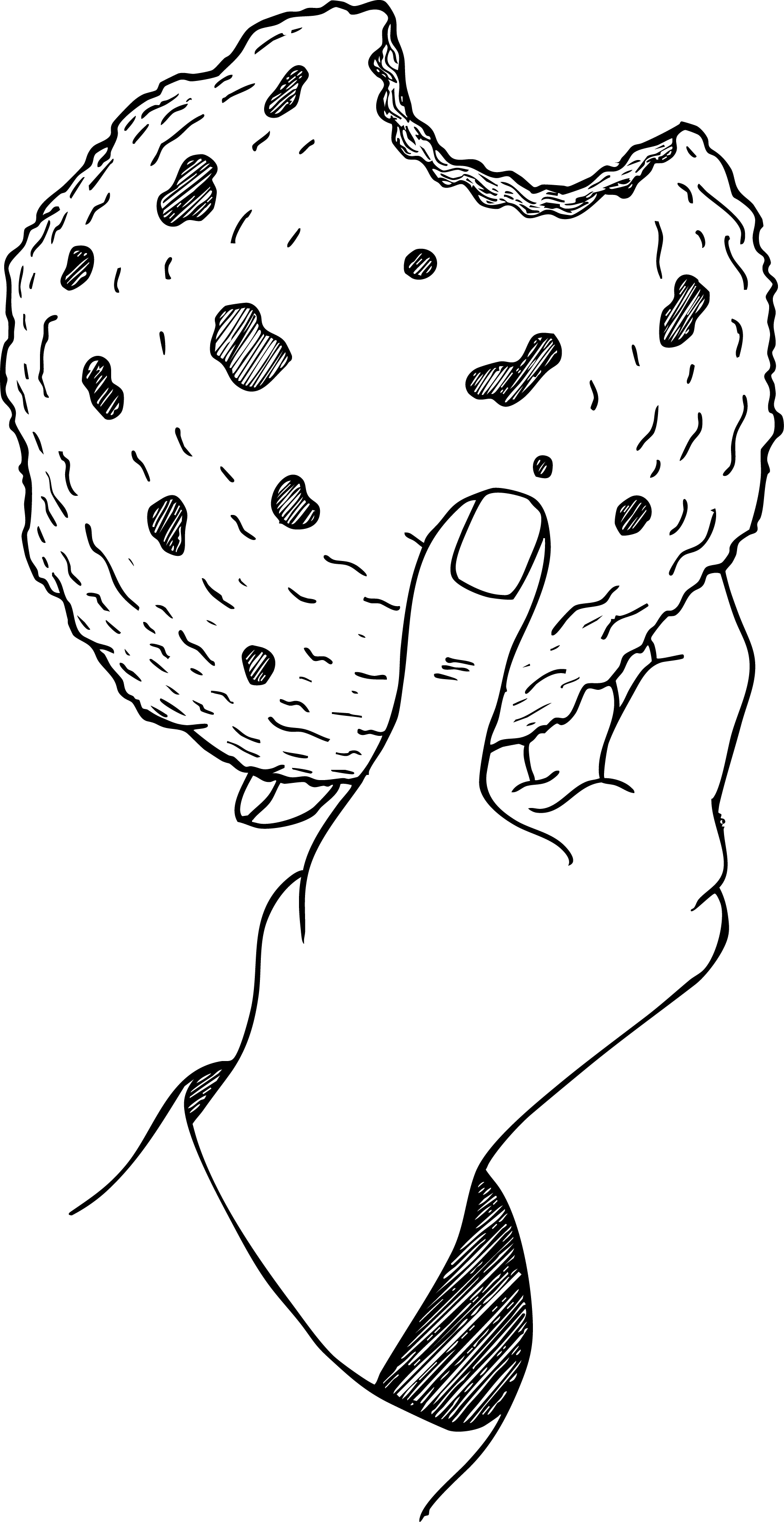
The story of many business owners goes like this. Makai loves cookies. She makes them all the time. A miller friend a few towns over gives her loads of free flour. The grocery store down the street has great bulk deals on 10lb bags of sugar. Her neighbor keeps chickens, and in exchange for occasional snickerdoodles, Makai often finds a carton or two of fresh eggs on her porch. Makai’s cookies are the best. She lives in a town with no cookie stores. Not one! So when she saw the “For Lease” sign in a window on Main Street, she knew what to do.
The raw source code here is cookies. Cookies are practically baked into Makai’s DNA. Makai is equally passionate about cookies as she is skilled at making them, and she has the means to produce them. She’s like a compressed spring, locked and loaded, waiting to burst into the world. This overflow of resources and ability is just as important for her business’s success as the town’s notable lack of cookie shops. The story gets a lot less interesting if Makai tries to open a cookie shop in Cookie Town™. Makai’s model could be mapped over any number of businesses, from Roger’s Taco Truck to Nicole’s Motorcycle Repair, and everything in between.
The basic goods and services a business provides—to whom, where, and in exchange for what—form the Body of a brand. A Body is the flesh-and-bones part of the frog that needs to be fed to survive and thrive, the physical aspect that squats on lily pads and gobbles up grubs. Think liver, heart, skin, and bones. Body is payroll, office space, warehouse, and logistics. Body is billing, finance, product, and supply chains.
If a business isn’t driving necessary revenue and operating efficiently, if it can’t deliver high-quality products on time and on budget, there’s no need to discuss campaign messaging or logo application. All the usual buzzwords about branding are irrelevant if your business can’t perform its base function.
Would you visit a dentist office knowing the foundation is cracked and the whole building wobbles in the wind? Would you take your car to a mechanic shop that catches fire, like clockwork, at 3pm every day? Or visit a pizza place with no working ovens? How is a frog supposed to swim in the pond with a broken leg or a wonky arm? A brand’s Body is a kind of fundamental prerequisite, the material foundation on which the rest of it stands.
Distilling Desire
If a frog’s Body is a biological robot, complex and capable in its own right but largely directionless without intentional input, then a frog’s Mind is the robot’s spirited pilot. The Mind of a brand acts as animating energy. Mind is the software that lights up the hardware, the electrochemical pulses racing through a labyrinthine brain. If you’ve spent any time in the marketing world, you’ll be relieved to hear solid ground is on the horizon. When I talk about a brand’s Mind, as opposed to its Body, I mean all the things typically associated with business philosophy, agnostic of department or team. I’m talking about a brand’s principles, beliefs, goals, values, culture, and strategy. What a frog believes about itself and its environment dictates every action it takes.
Figuring out what you believe is tricky business. I’ve seen countless organizations flounder like fish out of water, trying and failing to concretize a unified system of goals and values. Who are we? What’s our promise to customers? What do we value as a company? These questions spiral the best of us. I’ve watched competent CHROs lose their minds when the culture they desperately wanted to foster gets laughed out of the room by disgruntled, unsupported employees. I’ve watched highly skilled team members get set up for failure by toxic silos and internal politics. It’s one thing to say you know what your brand believes in your onboarding paperwork. It’s another thing entirely to put it into practice.
Mind exists like data on a server, vaporous and ethereal. Mist. That’s what makes it so difficult to nail down. Another challenge is volume. There’s a seemingly endless list of values and strategies required to build a brand, each dependent on the other to define and refine, as iron sharpens iron. That list only expands with every expert allowed to weigh in. Before long, you’re left with a ramshackle sandbox of a brand proposition, more folder than document, with crisscrossing lines and external links hiding behind sidebar comments from every team member lucky enough (or loud enough) to have contributor access.
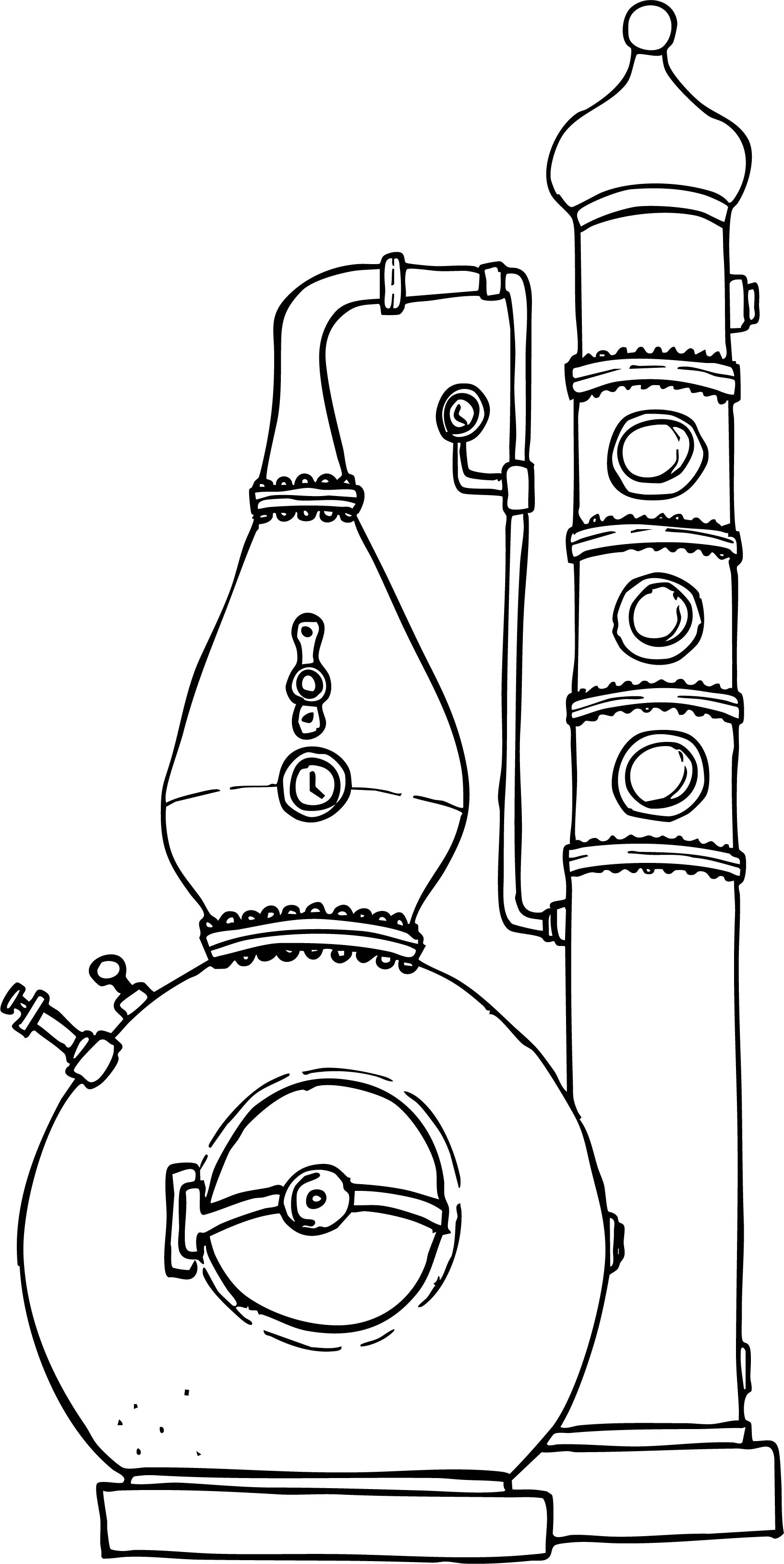
I was once the Creative Director for a craft distillery. In addition to free drinks and awesome coworkers, one of the primary benefits was education. I learned about distilling, particularly bourbon whiskey. Bourbon begins as giant vats of corn, rye, barley, and wheat. These grains get measured, ground up, and mixed with water to form a mash—basically porridge. Yeast is added, which produces a low-alcohol, beer-like liquid known as a wash. The wash is transferred to a still. Stills look complex, like copper rocket ships or glass submarines, but they’re essentially just big heating devices that boil the wash to capture and cool the vapor produced. That cooled, concentrated vapor is high-proof bourbon, ready to age and mellow in charred oak barrels.
A still’s power lies in its ability to ruthlessly filter out everything but a very particular substance and leave the rest behind. “No” is an underrated magic spell, as powerful as (if not more than) its popular sibling, “Yes”. Branding is a game of binaries. You either stand for something or you stand against it. No fence-sitting allowed. Mind is the tension created by limited yeses holding back a tidal wave of virtually unlimited nos. The finger on the switch of that yes/no binary is desire. Once a brand knows what it wants, what it really wants, what it’s always wanted, everything else falls into place. When those pieces fail to mesh, there’s usually one suspect to blame, and he’s a dastardly repeat offender.
Cognitive dissonance is a well-documented driver of mental health issues. This holds true for frogs, businesses, and people alike. Cognitive dissonance arises when conflicting beliefs occupy the same mental space, or when someone’s internal values don’t match their external actions. Both the person experiencing the dissonance and third-party observers feel it. The closer you get, the more obvious and uncomfortable the disconnect becomes.
“I know cigarettes are bad for me,” says the smoker, taking a long drag.
“Our new product is best-in-class!” the salesman announces from the launch podium. Beneath the applause, he knows full well the lengths the company has gone to source cheap materials, plan obsolescence, and prevent repairs.
If you think your customer base can’t sniff out this dissonance from a thousand yards away, you’re dead wrong.
Let’s return to Makai’s cookie shop. The desire that forms the Mind of Makai’s brand is simple. Makai wants to make delicious cookies for her community. All of Makai’s decisions—how she prices her cookies, where she sources her ingredients, what color she paints the walls, what hours her shop is open, what uniforms her employees wear, what music she plays in the lobby—revolve around that singular desire. To be clear, a brand that’s made up its Mind doesn’t mean hard times will never come. They will. I promise.
A thriving brand won’t protect you from market fluctuations or nationwide staffing shortages. But when the waters get choppy and pea-soup fog closes in, a brand’s steadfast self-knowledge can act as a compass, a lighthouse in the storm. Not every brand needs a selfless, lifelong passion to succeed, either. You only need to be clear and consistent. There’s nothing wrong with a business that wants to make money. Just don’t pretend to be a mission-driven nonprofit while you do it.
The Song of the Fisherman Prince
Life is funny. Sometimes you plan a grand backpacking trip across Hawaii, then a global pandemic hits, new laws are passed, islands shut down, the world goes crazy, and you, my friend, wash up at the rusty front gate of some backwater hippie farm in the jungles of Puerto Rico, having been ferried from an abandoned rural airport by a rickety van full of very nice strangers. Plan A might have gone up in a mushroom cloud of cheap masks and expensive vaccines, but you’ve still got plans B through Z.
I remember lying on my bed in the wee hours of that first night on the farm, trying (unsuccessfully) to sleep. The farm’s version of air conditioning was replacing glass windows with mesh screens, which meant I heard everything in the darkness outside. And I mean everything. A billion bugs screamed incessantly. Snakes slithered through long grass. The river babbled. Birds and beasts of every size and sort howled like an army of ghouls. Beneath it all lay a perpetual, high-pitched, almost electronic drumbeat. The sound was so loud, so all-encompassing, I couldn’t help but wonder if it was coming from inside my own head.
Co-qui! Co-qui! Co-qui!
The Taíno people of Puerto Rico have a legend. Long ago, there was a handsome prince named Coquí, who loved to fish at night. As Coquí fished, he sang songs to Atabex, a powerful goddess, thanking her for his tasty catch. Atabex grew to love Coquí and his songs. One night, the goddess appeared to Coquí as a beautiful maiden, and the two fell quickly in love. But the gods are jealous. Juracán, a storm spirit, saw the lovers and grew angry. She sent a powerful storm that washed Coquí away. The fisherman prince was never seen again. Heartbroken, Atabex created a tiny frog to embody her grief. The goddess told the frog that he and all his descendants would be a living memorial; they would forever sing the name of the man she loved and lost. The coquí has since become a cultural icon. Many Puerto Ricans understand the tiny frog’s call not merely as a random sound in the night, but as something deeper, more fundamental to their identity. The nostalgic chirp of the coquí is the island’s soul made song, beckoning her people home.
What is a voice if not a bridge between worlds? Voices begin as thoughts in our heads. Through our lungs, vocal cords, teeth, and tongue, those thoughts transform empty air into physical sound waves, each crest and trough loaded with meaning like trading ships bound for distant shores. The sea is vast, though, and time stretches long. A voice may take decades to find its listener, like a dusty record shoved to the back of a shelf. Only when those airwaves reach a listening ear does the process reverse. Tangible pressure waves unravel as the dock-worker bones of the inner ear unload their vibratory meaning and shuttle it to the brain’s processing halls. Depending on what they hear, the listener will likely package up a mental response, wrap it in metaphorical styrofoam and cardboard, and send their own voice back into the world.
We’ve talked about a brand’s Body and Mind, but a brand’s Voice emerges when Body and Mind are in sync. Once a business gets good at what she does and knows what she wants, she’s free to open her doors and invite others in. This transformation of them into us is the alchemical lynchpin, the primary function of any healthy, thriving brand. Voice is everything external, everything offered to customers to convince them to join the fun. Graphic design is Voice. A brand’s website is Voice. Social media presence and paid ads are Voice. So are commercials, swag, and event booth backgrounds.
Not everyone will accept a brand’s invitation, and that’s perfectly normal. When the best businesses run an ad campaign or announce a new product, they’re not hoping everyone will line up outside. They’re searching for resonance, for lost members of the tribe. This is why stumbling on your new favorite shirt or that cozy corner coffee shop feels less like discovery and more like remembrance, like coming home. Oh, it’s you! the shopper whispers to the perfect pair of shoes. Where have you been all this time?
An apple tree relies on creatures who love apples. Apple eaters spread seeds to communities of more apple eaters. The same goes for orange trees, strawberry bushes, and pumpkin vines. Plants aren’t the only ones who attract others in kind. A wolf howls not to find elk, but to find more wolves. A whale’s song isn’t composed for seagulls. In many ways, branding is a question of taxonomy. A business has to know who she is to tell the truth about herself. What good would it be for a pear tree to brag about growing peaches? Or a coconut palm to grit its teeth and squeeze out raspberries? Not only is this disingenuous (everyone knows when someone is pretending to be somebody else), but it prevents a brand from ever building a loyal following. Loyalty, resonance, truth—these are the joyful, gravitational forces that empty wallets and fill accounts.
It would be an error to confine a brand’s Voice purely to words. Copywriting is only one venue where a brand can sing. Voice transmits as much through a logo as it does through a font, a color scheme, or photography. But never mistake transmitter for transmission. All the shapes and colors in the world can’t save a brand who doesn’t know what she wants to say, or to whom. Or why.
Ah-Choo!
A shift is required in how we talk about a brand’s efficacy. Instead of discussing brands in terms of success or failure, as has been tradition in the business world for ages, I suggest we turn our focus rings and begin analyzing brands in terms of sickness and health. This isn’t just metaphorical preference. I’m not recommending we stop tracking valuable KPIs (key performance indicators). But when we place metrics on a pedestal, we chase numbers as if they’re the end goal, when all along, something deeper is happening, something far more complex and important. Something preeminent.
A healthy frog isn’t an object, not really. There’s nothing singular about it. A healthy frog is a system, an organic Rube Goldberg machine made of stretchy ropes, greased gears, and tangled tubes tied to sticks and hinges. Health is a holistic assessment of how well that system operates. Systems only work when their distinct components, like organs in a body, don’t just perform specific functions but actively serve their neighbors. Healthy organs are players on a basketball team, constantly passing to one another. Healthy hearts pump blood to healthy brains, which fill healthy lungs, which power healthy muscles protected by healthy skin. Health enables a frog to competently engage with the outside world—chasing bugs, hiding from snakes, croaking on lily pads. If health measures how well a frog is glued together, sickness is what happens when frogs fall apart.
Several years ago I saw a viral video that changed me, it’s hard to say for better or worse. Shot with a microscope camera, the video captures the final moments in the life of a single-celled organism. At first, the cell—a vaguely eye-shaped body filled with gelatinous orbs, propelled by undulating, millipede legs—is perfectly fine. Without warning, the back end bursts open, scattering a plasma of micro-organs in its wake. There’s a moment where the cell seems to wonder what’s happening. Then the front comes undone too. It clicks. Something is wrong. The cell’s cilia (little legs) kick into high gear and the cell rockets upward, but the protoplasm splatter it’s leaving behind weighs it down. The cell struggles until it breaks free from its own translucent innards. Now half its original size and noticeably weaker, it struggles across an empty gray plane, arcing in tighter and tighter loops, frantic and random. Then, like an invisible hand tugging on a zipper, the outer wall disintegrates. Legs keep kicking even as they detach and drift away. Lacking outer walls to tell them where to go and how to be, a thousand organelles abruptly disperse, bubble-like and weightless, until all that remains is a haphazard field of lonely blobs and free-floating jelly.
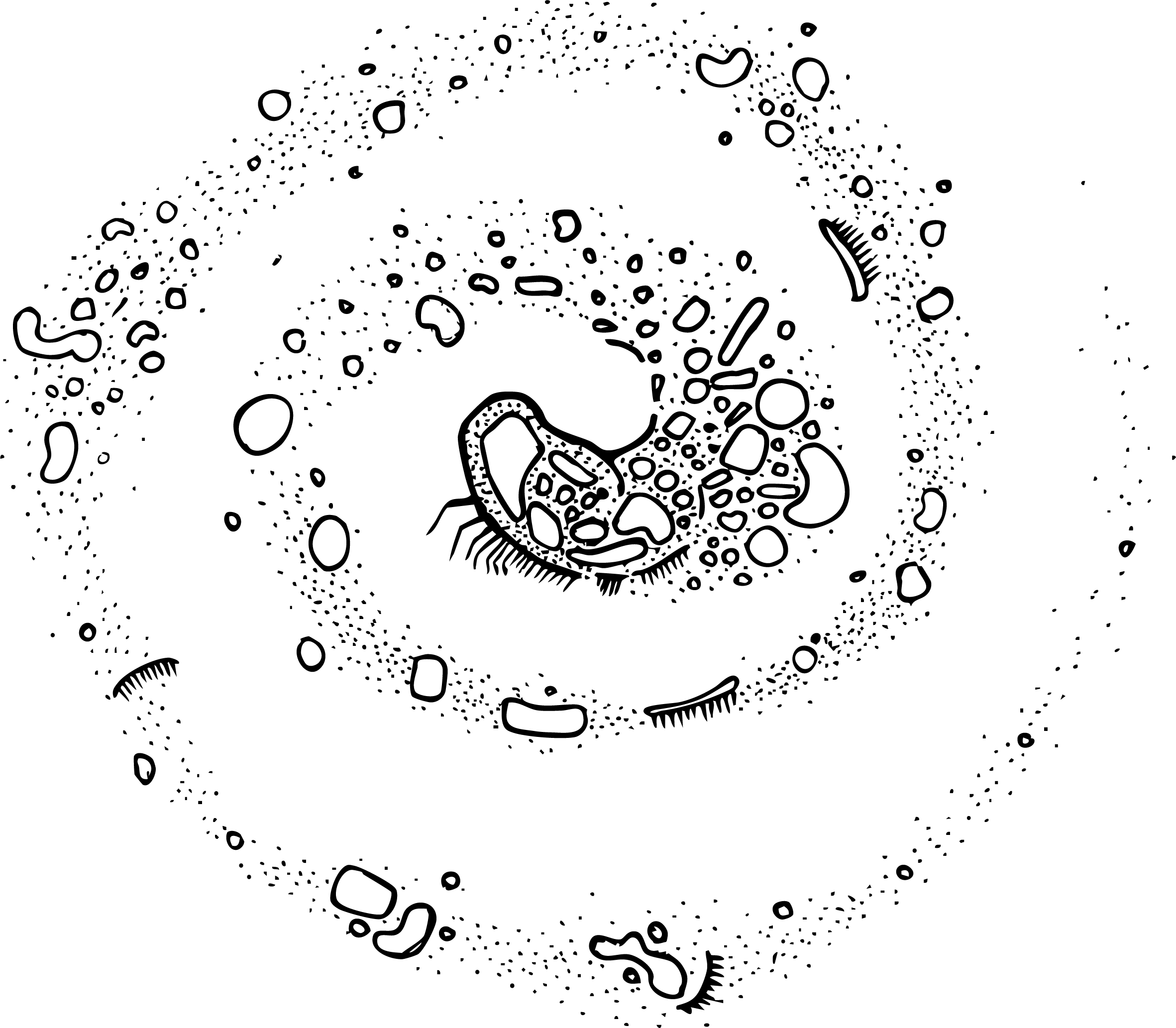
All is still.
In thermodynamics, enthalpy measures the strength of chemical bonds in a system. Poetically speaking, enthalpy is the tendency toward existence. Entropy, on the other hand, is synonymous with chaos, measured as the statistical tendency of a system to arrange and align itself in infinite, ever-changing, increasingly random ways. Alignment. That’s the key word, and it’s what separates brands that never get off the ground from brands that change the world.
Remember the Taíno story of the goddess and the fisherman prince? Imagine the instant Atabex created the first coquí. In the legend, the goddess creates the frog with ease, perfectly, on the first try. Everything falls right where it should. But what if a cat walked by at that exact moment? Atabex, as you probably know, is terribly allergic to cats. Instead of gracefully breathing tender new life into the world, the goddess sneezes into her palm, and out comes a slimy red atrocity nobody in their right mind would call a frog, much less a coquí. For starters, the whole thing is inside out. It’s squirming, wet, and undeniably wrong. There’s a webbed foot jutting out from an elbow, and a liver where a tongue should be. A single yellow eye stares out—wide and unblinking, like a prisoner behind bars—from the mangled wreckage of a rib cage.
Chaos is a symptom of a sick brand. When a brand’s Body, Mind, and Voice decide the others don’t matter or don’t know what they’re talking about, and each forges its own path, it’s only a matter of time until those detached shards wither and die, like fingers separated from a hand.
How many times have you been duped by effective advertising, fallen for a siren’s song, only to open the package and find yourself disappointed by the product’s quality? The Voice was good, beautiful even, but the Body and Mind were pale. How many highly skilled, passionate local craftsmen do you know who struggle to pay the bills because of poor marketing or a nonexistent website? The Body and Mind are strong, but the brand is mute. Her Voice cannot be heard. How many brilliant startups rocket off the launch pad, gathering investors, news appearances, and an enthusiastic early following, only to break up a year down the road, torn apart by infighting and office politics? Voice is singing. Body, running like a champ. But Mind is shattered.
Without alignment, without proper assemblage of and connection between parts, brands fail to operate as anything more than shadows of their true selves, limping specters of the lions they could be. When a brand’s three parts are aligned and finely tuned, however, something wonderful and mysterious begins to happen.
The Scent of Heaven
I’ve never been one for lotion. I’m not a regular user of tinctures, salves, ointments, creams, or body oils. I’m a man, damn it! A big strong man who hunts and fishes and drinks cheap beer and spits on the ground for the heck of it. Aversion to sugar scrubs aside, I recently visited a small-batch soapery with my girlfriend that had me second-guessing my lack of a morning routine. Welcome to Solid Olive Soap.
For starters, the shop was pristinely organized. Hundreds of multicolored bars in muted shades lined forest green walls. Large, beautiful, custom-built wooden tables ushered you inside and around the room, each displaying a wide array of scented oils, bath salts, and hand creams. I usually cringe when forced to walk past the big box lotion store in the mall. You know the one, it’s like a migraine-scented candle. But if heaven has a smell, it’s Solid Olive Soap. Curiously, it takes you a second to register it. The aroma isn’t overwhelming, isn’t cloying, not begging for attention, like quiet music playing in the next room. I couldn’t identify the smell if I tried. Sandalwood, maybe? Citrus? The scent is perfectly content to remain soft and undefined, purely for its own sake, with or without you. Which only makes you want it more.
The owner—a generous, talkative man with a Snoopy tattoo on one arm and “E=MC²” on the other—greeted us within seconds of walking in. I can’t stand it when some over-enthusiastic employee zeros in on me for a sales pitch. Not so at Solid Olive. I could have listened to that man talk for hours. I wish he had a soap podcast. He was the perfect blend of knowledgeable and enthusiastic, empathetic and direct, clearly a master of his craft. He told us how his soaps were handmade in small batches with high-quality olive oil right there in the shop. Free samples flowed like wine at a wedding party. I was particularly drawn to a bar of cedar soap that smelled like sawdust. It reminded me of my days as a carpenter. My girlfriend opted for a lavender-scented body oil, which, at checkout, was mixed right in front of us. The owner and his wife let us smell different kinds of lavender—a Bulgarian and a French, if memory serves—and pick our favorite. We couldn’t decide and asked for a blend of the two. By the time we walked out, we were the proud owners of four different bars of soap, including a 100+ year old recipe of Japanese green persimmon soap meant to combat the smell of aging (who knew?), a bag of bath salts, several different lotions and oils, and a branded tote bag. I could’ve blown several hundred dollars at that shop. Easily. And I don’t really care about soap!
Brands find you more often than you find them. When they do, there’s a distinct sense of being swept up in something larger than yourself. Encountering a healthy brand feels like electricity, like coming up for air, like being carried away by a current. There’s something hauntingly, undeniably alive about a genuine brand, something that can’t be faked by flashy advertising and slick website UI. At their core, brands are emotional; they inspire motion—actual physical action—in themselves, in their competitors, in their vendors, and in their customers. This is why bullfrogs croak and tree frogs sing. Every ribbit you’ve ever heard is half mating call, half territory defense, all celebration of who, where, and why frogs are.
Co-qui! Co-qui! Co-qui!
I’m here! I’m here! I’m here!
A coquí doesn’t co-qui because the sales team fell short in Q3 and there’s a product launch coming and he needs to close the gap in Q4 before next year’s investors bail. A coquí co-quis because he wants someone to be a coqui with. And only when the coquí can co-qui with other coquís will he truly become who he was meant to be, who he’s really been all along, deep down inside and shining out.